info@gensolar.in
 +91 93987 35165


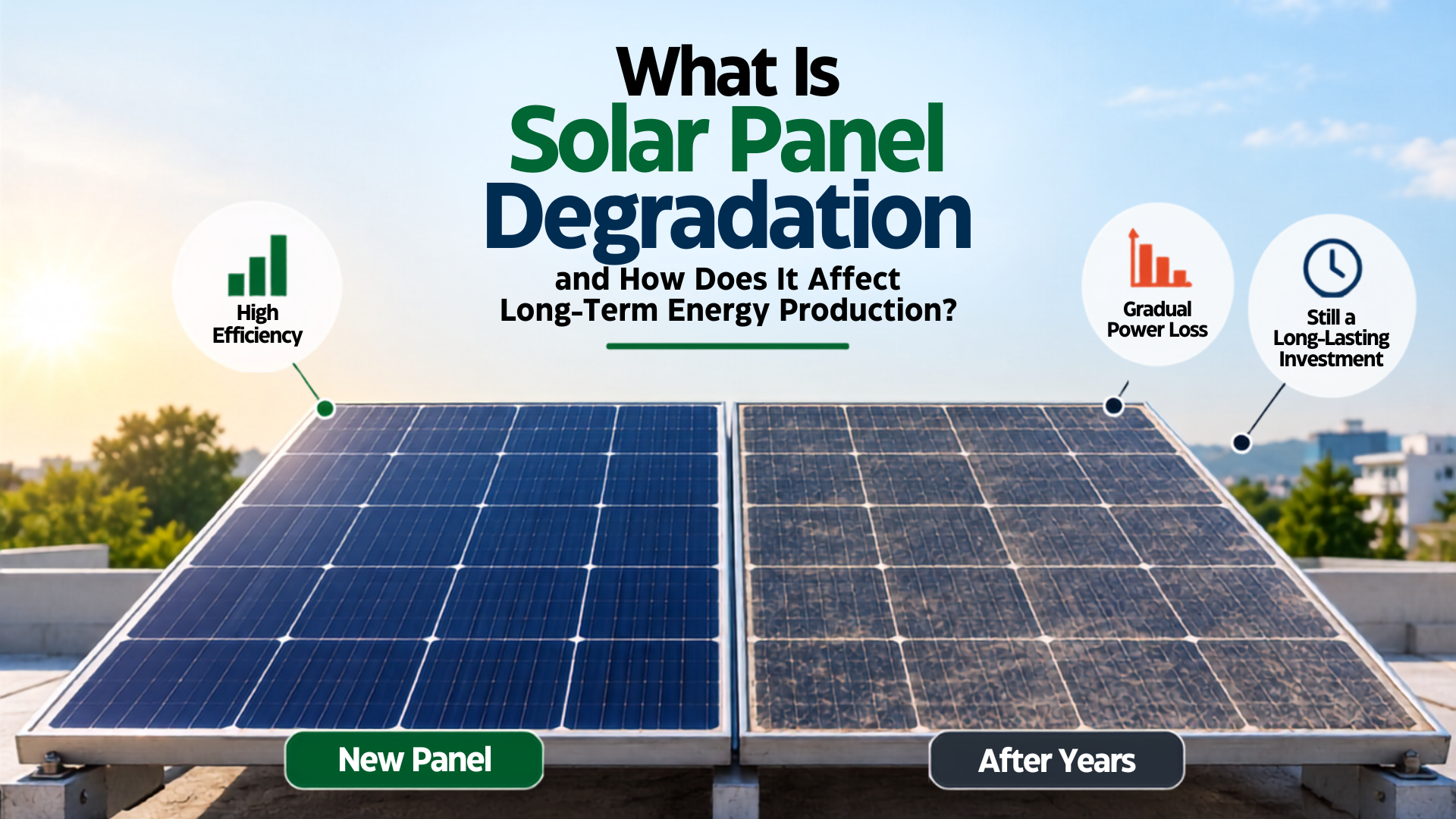
What Is Solar Panel Degradation and How Does It Affect Long-Term Energy Production?
Solar panels represent an investment for home and office buildings since they lower the electric bills through the generation of electricity from sunlight. But just like any equipment that gets exposed to external weather conditions, solar panels eventually lose some efficiency. This process is known as degradation of solar panels.
Knowledge about the reasons for degradation and its impact on the generation of electricity will enable one to make the right decisions concerning the installation and maintenance of solar energy systems.
What is Solar Panel Degradation?
Solar panel degradation is the progressive decrease in the effectiveness of the solar panel in producing electrical energy with age. At the initial stages, the solar panel will work at almost optimal output level when all conditions for operation are favorable. However, due to aging, the performance of the solar panel will be affected by different factors such as sunlight, temperature and humidity among others.
For instance, a solar panel that was initially producing a certain amount of electrical energy may start producing a smaller amount after some time.
Degradation of Solar Panels
Some of the causes that can affect solar panels are as follows:
1. Exposure to sunlight:
The solar panels are exposed to the sunlight for some time each day. The long exposure to sunlight may affect the parts of the solar panels.
2. Heat:
There is exposure to heat due to operation of the solar panels, especially when there is high heat around.
3. Humidity and moisture:
The moisture and humidity may have an effect on the protective layer as well as electrical components, especially when the panel is badly made or installed.
4. Dust and other environmental factors:
The existence of dust and pollution can lead to low electricity production since sunlight is blocked. This factor does not normally lead to degradation, but it affects the performance of the system.
5. Quality of manufacturing:
Quality of cells as well as manufacture of panels can affect the capacity of panels to resist environmental factors.
What Effects Does Degradation Cause on the Amount of Generated Power?
The primary impact of degradation is a constant decline in the quantity of the generated power. A solar power plant that produces power in the first year of its work will produce less power in future years.
For instance, consider a solar power station generating 5,000 kWh per year during the first year of operation. With the rate of degradation of 0.5% per year, the power station will be generating only 4,780 kWh per year in the tenth year.
The gradual degradation during this time period of 20 to 25 years may affect the total amount of electricity generated and savings for the owner of the property through this process.
However, there are other considerations as well regarding energy generation, which include, but are not limited to, the intensity of sun rays falling on panels.
How Can You Reduce the Impact of Degradation?
Though you cannot avoid the solar panel degradation, there are many ways to protect against it.
* Choose reliable solar panels whose efficiency is guaranteed.
* Install the panels correctly.
* Clean them regularly from dust and other waste.
* Check electrical connections and mounting systems.
* Monitor the energy produced by the panels.
* Invite professionals for an inspection in case the output of energy falls below the normal level.
Such methods will ensure that your system’s performance remains at its best and potential problems are found prior to any other damage being done.
Solar panel degradation is a natural phenomenon associated with solar systems. The panels may lose some of their generating capacity over time, but they are still able to produce power for several more years.
Buying good equipment and performing the proper maintenance can ensure good performance of the system. Knowing about the issue will help you form reasonable expectations from the system’s operation and benefits from it.